Of Amazing Things / explora / guias-miami
How to Prepare for Extreme Heat in Florida
A practical guide to checking the heat index, organizing a cooler home, and protecting children, older adults, pets, and outdoor workers.
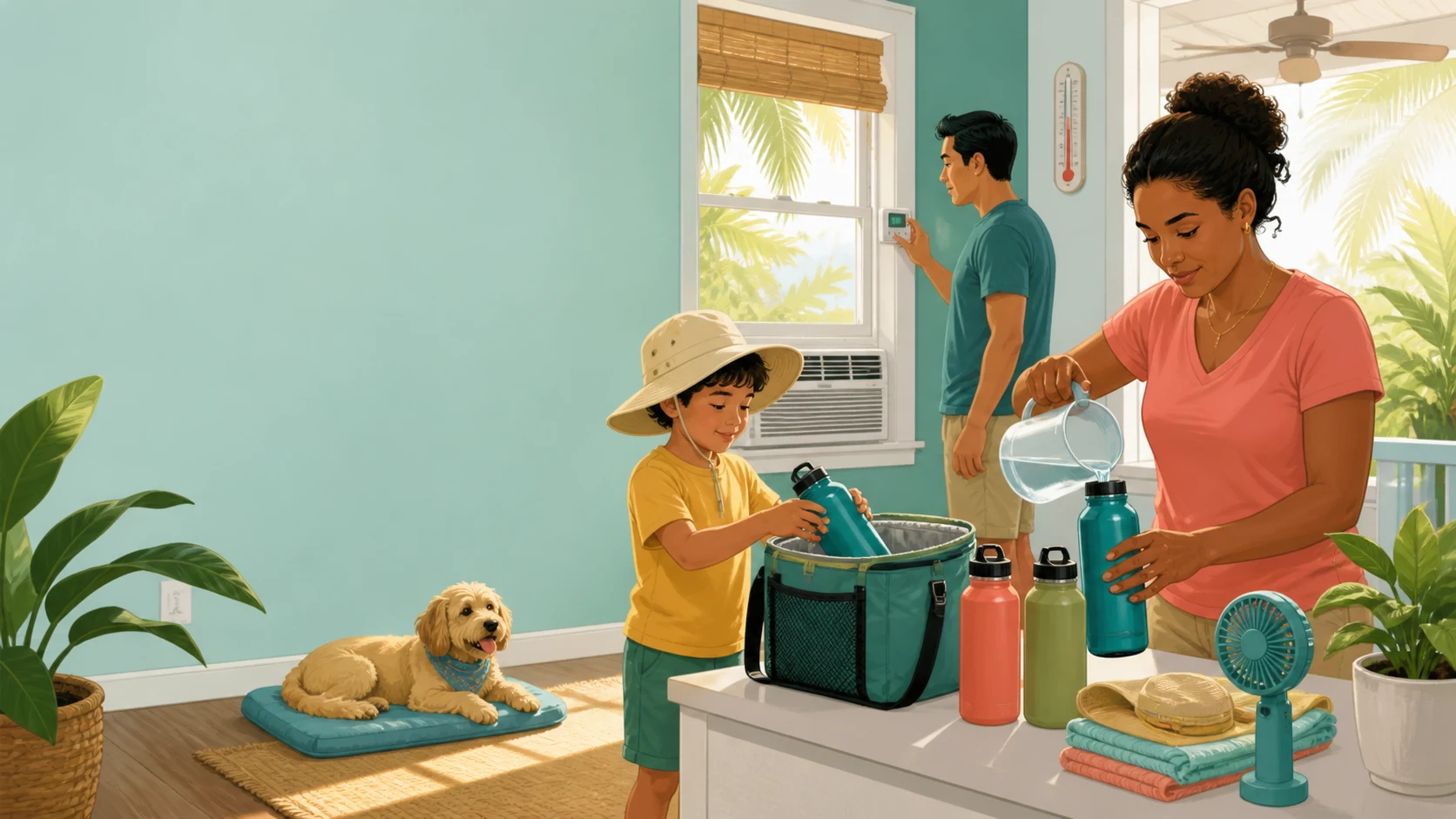
Short answer: preparing for extreme heat in Florida means checking the heat index and official alerts, limiting exposure during the hardest hours, keeping water and cool spaces available, and knowing when heat becomes an emergency. Heat is not measured by the thermometer alone: humidity changes how difficult it is for the body to cool itself.
This guide is general information for residents and visitors. It does not replace medical advice or a local alert. For planning an outing, pair these recommendations with our practical Miami beaches guide, Miami planning guide, or family restaurants guide.
What “extreme heat” really means
The National Weather Service Miami office explains that the heat index combines air temperature and relative humidity to estimate how hot conditions feel to the body. Its South Florida graphics are updated at least twice daily. The number is not a statewide forecast: counties and local areas can have different conditions.
The heat index is calculated for shade and light wind. NWS warns that direct sunlight can raise the apparent temperature by as much as 15°F. A walk across asphalt, an unshaded court, or roof work can therefore be more stressful than the number shown in an app. Check the official forecast for the county where you will be and consider humidity, shade, and the length of the activity.
How to read heat alerts
Heat products have different purposes. A Heat Advisory signals dangerous heat that requires action; an Extreme Heat Watch means conditions are possible and it is time to prepare; an Extreme Heat Warning signals extremely dangerous conditions that are expected or occurring. Exact thresholds can vary by forecast office and local climate.
Do not wait for an alert to adjust plans when someone in your group is especially vulnerable. The official NWS alert guide recommends postponing strenuous outdoor activities, finding an air-conditioned space, drinking water, and checking on family and neighbors. Use the latest official forecast; this article does not publish a forecast or a date-specific alert.
Build a home plan before the hottest day
Choose the coolest room in your home and check that the air conditioner, filters, and fans work. Close blinds or curtains on windows receiving direct sun and avoid creating unnecessary indoor heat with an oven or dryer during the hardest part of the day. If your home cannot stay cool, identify a library, community center, shopping center, or another permitted air-conditioned place.
The CDC advises using fans carefully: when indoor temperatures are above 90°F, a fan can raise body temperature instead of providing enough cooling. Do not automatically treat a fan as a substitute for air conditioning. Keep chargers, regular medicines, water, and important contacts together, especially if someone depends on electricity or refrigeration.
Hydration and clothing choices
Drink water regularly instead of waiting until you feel thirsty. For a long activity, pack refillable bottles and plan shaded breaks. The Florida Division of Emergency Management advises drinking fluids, avoiding alcohol, and not taking salt tablets unless a doctor directs you to do so. People with heart, kidney, or liver disease, fluid-restricted diets, or fluid retention should ask a clinician before increasing fluid intake.
Choose lightweight, loose, light-colored clothing, a brimmed hat, and sun protection. Clothing does not make an activity safe when it should be canceled. If a plan involves running, working, sports, or waiting in the sun, slow down, take frequent breaks, and move it to morning or evening when possible.
Protect people and pets at higher risk
Young children, older adults, pregnant people, those with chronic conditions, athletes, outdoor workers, people without stable shelter or air conditioning, and pets may need extra measures. Miami-Dade also notes that some health conditions and medicines — including certain allergy, blood-pressure, thyroid, depression, or weight-loss products — can increase heat sensitivity. The local guidance recommends discussing individual situations with a doctor.
Make a household checklist: who will call or visit an older relative, where a worker will cool down after a shift, how a pet will stay comfortable, and what to do if the air conditioner fails. Never leave an infant, child, person with a disability, or pet in a parked car, even with windows cracked or for a short stop.
What to do outside or at work
Before leaving, check the heat index, available shade, travel time, and how quickly you could return. NWS Miami lists outdoor-work measures such as gradual acclimatization after an absence, shade, earlier or later scheduling, work-rest cycles, and limiting heavy exertion. Apply the same logic to moving, repairs, youth sports, and park visits.
If the route includes a beach, also check water conditions and safety information in our Miami beaches guide. A breeze does not remove heat risk, and sun on sand or pavement can increase exposure. Bring water, a return route, and an indoor backup; our family activities guide can help you plan an outing that does not depend on midday outdoor time.
Recognize heat exhaustion and heat stroke
Heat exhaustion may include heavy sweating, cool or clammy skin, weakness, dizziness, headache, nausea, or cramps. Move the person to a cooler place, loosen clothing, use cool wet cloths, and offer small sips of water only if the person is fully awake and able to drink. Watch the situation and seek medical care if symptoms worsen or do not improve.
Heat stroke is an emergency. Confusion, loss of consciousness, seizures, very hot skin, or a body temperature of 103°F or higher are warning signs to call 911. Ready.gov and the CDC advise moving the person to a cooler place and cooling them; do not give fluids if the person is confused, unconscious, or cannot swallow safely. Do not delay the call while trying to handle the emergency at home.
Where to cool down and find local information
Miami-Dade maintains an official list of cooling sites that includes libraries, parks, public buildings, and other spaces with published addresses, phones, and hours. Availability can change by day, location, or emergency, so check the listing before traveling. If someone feels ill and needs medical assistance, call 911.
For weather information, use the NWS office serving the area instead of an old social-media screenshot. For statewide emergency information, check FloridaDisaster.org. If you want a lower-effort family plan, see our family restaurants guide and choose an air-conditioned place only after confirming that it is still open.
Preparation checklist
- Save the official forecast and heat index for the county where you will be.
- Test the air conditioner and choose a cool indoor room.
- Pack water, lightweight clothing, a hat, and sun protection.
- Reschedule exercise and heavy work outside the hardest hours.
- Check on people at higher risk and never leave living beings in a car.
- Learn heat-stroke warning signs and keep 911 in mind.
- If you lack air conditioning, locate a cooling site and confirm its hours.
Limits, transparency, and sources
This guide was prepared on August 30, 2026 using information from NOAA/National Weather Service, CDC, Ready.gov, Florida Division of Emergency Management, and Miami-Dade County. It does not provide a forecast, alert, diagnosis, or personalized instructions. Cooling-site hours, local criteria, weather conditions, and recommendations can change; verify official sources before acting. The cover is an editorial illustration generated for this article and does not depict a specific family, home, temperature, or real Florida location.