Of Amazing Things / explora / guias-miami
How to Prepare a Florida Home for Hurricane Season
A practical checklist for supplies, home protection, evacuation and recovery.
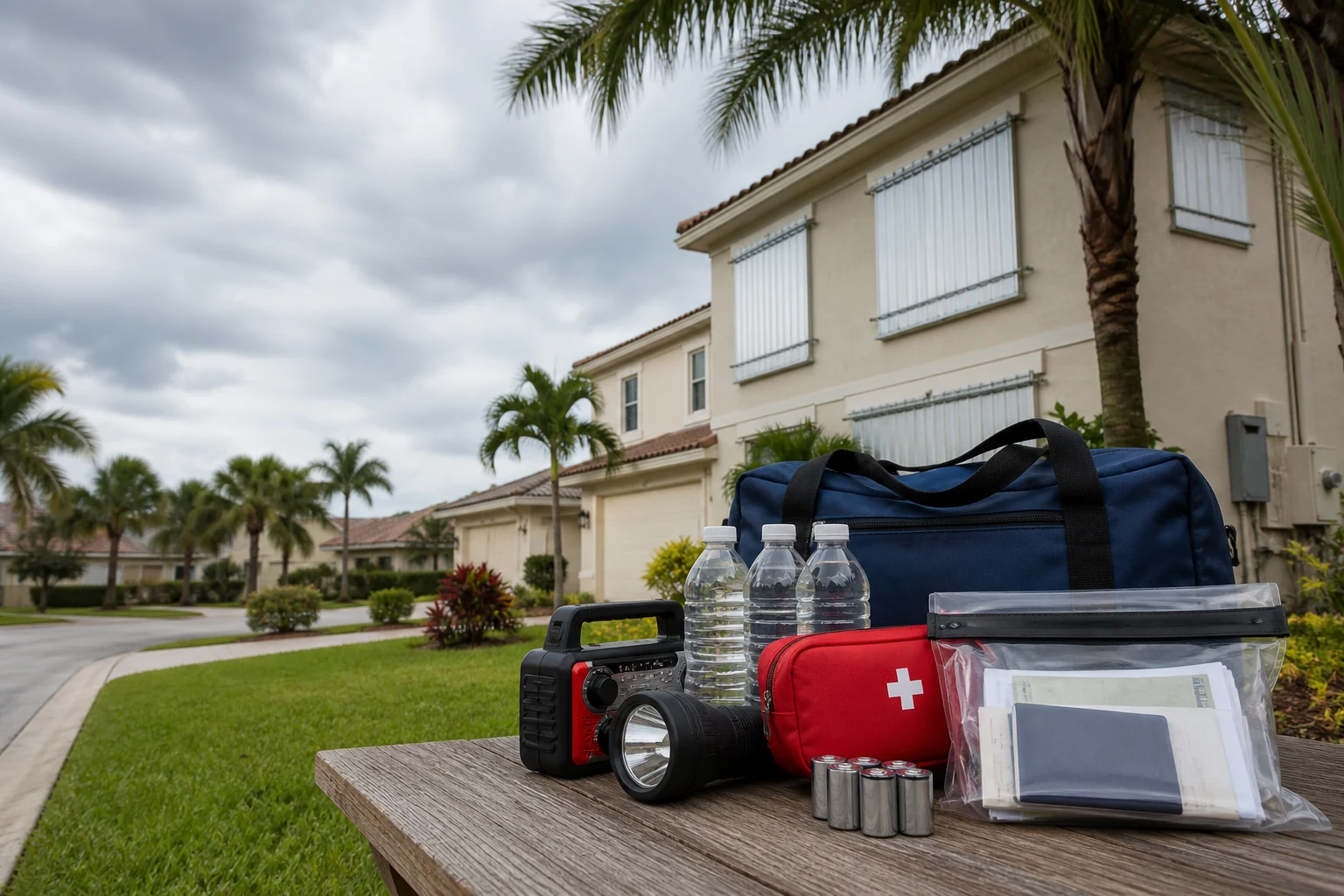
Illustrative image: this hero was generated for the guide and does not depict a specific home or a documentary photograph of a storm.
Preparing for a hurricane in Florida is not about waiting for a forecast cone. The Atlantic season runs from June 1 through November 30, and activity typically increases from August through October. The Florida Division of Emergency Management warns that one system can bring wind, heavy rain, flooding, tornadoes and storm surge. A calm week is the right time to prepare your home, not the morning shelves empty.
1. Start with your home’s risk
Living inland does not remove the risk. The National Hurricane Center lists storm surge, heavy rainfall and inland flooding, high winds, rip currents and tornadoes among the main hazards. The useful question is not only “am I in Miami?” but “which hazards can reach my address and the people who live with me?”
Check your county evacuation map and official instructions. Florida’s preparedness guidance says residents should know their evacuation zone, possible routes and where they could stay. Save official links on your phone and think through the needs of children, older adults, pets and anyone who relies on medication or accessibility support.
2. Build a kit that works without power
Keep supplies together in a box or bag that you can carry. Ready.gov recommends food, water and essential items for several days. Your kit should be practical rather than perfect:
- Water and shelf-stable foods your household will actually eat.
- Medications, a first-aid kit, hygiene items and prescription copies.
- Flashlights, spare batteries, a radio and portable phone chargers.
- IDs, insurance policies, emergency contacts and some cash in a waterproof pouch.
- Food, water, medication and a carrier for every pet.
- Clothes, closed-toe shoes and supplies for babies or anyone with specific needs.
Check batteries and expiration dates monthly. If you use a generator, operate it outdoors and away from windows, doors and attached garages. Carbon monoxide is odorless and can build up quickly.
3. Remove objects that can become debris
Before severe weather, bring in or secure patio furniture, planters, grills, umbrellas, decorations, tools and anything loose. Trim weak branches according to local rules, and do not leave yard waste at the curb after a storm threat has been announced. FDEM notes that debris, downed power lines and unstable trees remain dangerous during cleanup.
Inspect doors, windows, shutters and the roof early. If you use panels, measure and label them before the season. Do not wait for the first warning to discover that a fastener is missing or a panel no longer fits.
4. Decide early whether you will evacuate
Evacuation should not begin after traffic has stopped. Write down two destinations: one nearby for a quick departure and one outside the risk area. Decide which vehicle you will use, which documents you will take and who is responsible for each pet. If you need medical equipment or accessible transportation, coordinate with your support network and county officials before a storm.
If officials order an evacuation, use the designated route and never drive around barricades. If you stay, choose a small interior room away from windows and doors, on the lowest level that will not flood. Do not return to an evacuated area until officials say it is safe.
5. Protect documents, insurance and communication
Photograph important documents and store them in an encrypted location or waterproof pouch. Review your homeowners policy: standard policies generally do not cover flooding, so separate coverage may be needed. Ask about exclusions, deductibles and waiting periods before a storm is approaching.
Agree on a family communication plan. Texting may work when calls do not. Add an out-of-area contact, a meeting point and a simple way to confirm that everyone is safe. Follow county alerts, Ready.gov alerts and the National Hurricane Center.
6. Read seasonal outlooks in context
NOAA’s 2026 Atlantic outlook describes expected basin-wide activity; it is not a forecast of landfall in Miami or any particular city. NOAA projected a season more likely to be below normal, while also explaining that a quieter season does not eliminate the possibility of a local impact. Base decisions on short-term advisories and official instructions, not on a seasonal number.
When a threat develops, check the latest NHC update and your county’s emergency communication. Do not forward old screenshots or undated maps that can create false confidence.
7. Stay cautious after the storm
Wait for official reentry guidance. Avoid floodwater, downed power lines, unstable trees and displaced wildlife. If you use a generator, keep it outdoors and away from windows and doors. Photograph damage, save receipts and contact your insurer before major repairs.
Responsible preparation is not about predicting exactly what will happen. It is about removing last-minute decisions: what to take, who to call, when to leave and where to shelter. For more information, consult Florida’s evacuation planning guide, the Ready.gov hurricane resources and the NHC hazards page.
Sources and editorial scope
This guide summarizes public recommendations from FDEM, FEMA/Ready.gov and NOAA reviewed on August 11, 2026. It does not replace county emergency instructions, an insurance policy or professional advice.