Of Amazing Things / explora / playas
Miami Beaches: Access, Parking, and Safety
A practical guide to choosing a beach, arriving early, and making safer water decisions.
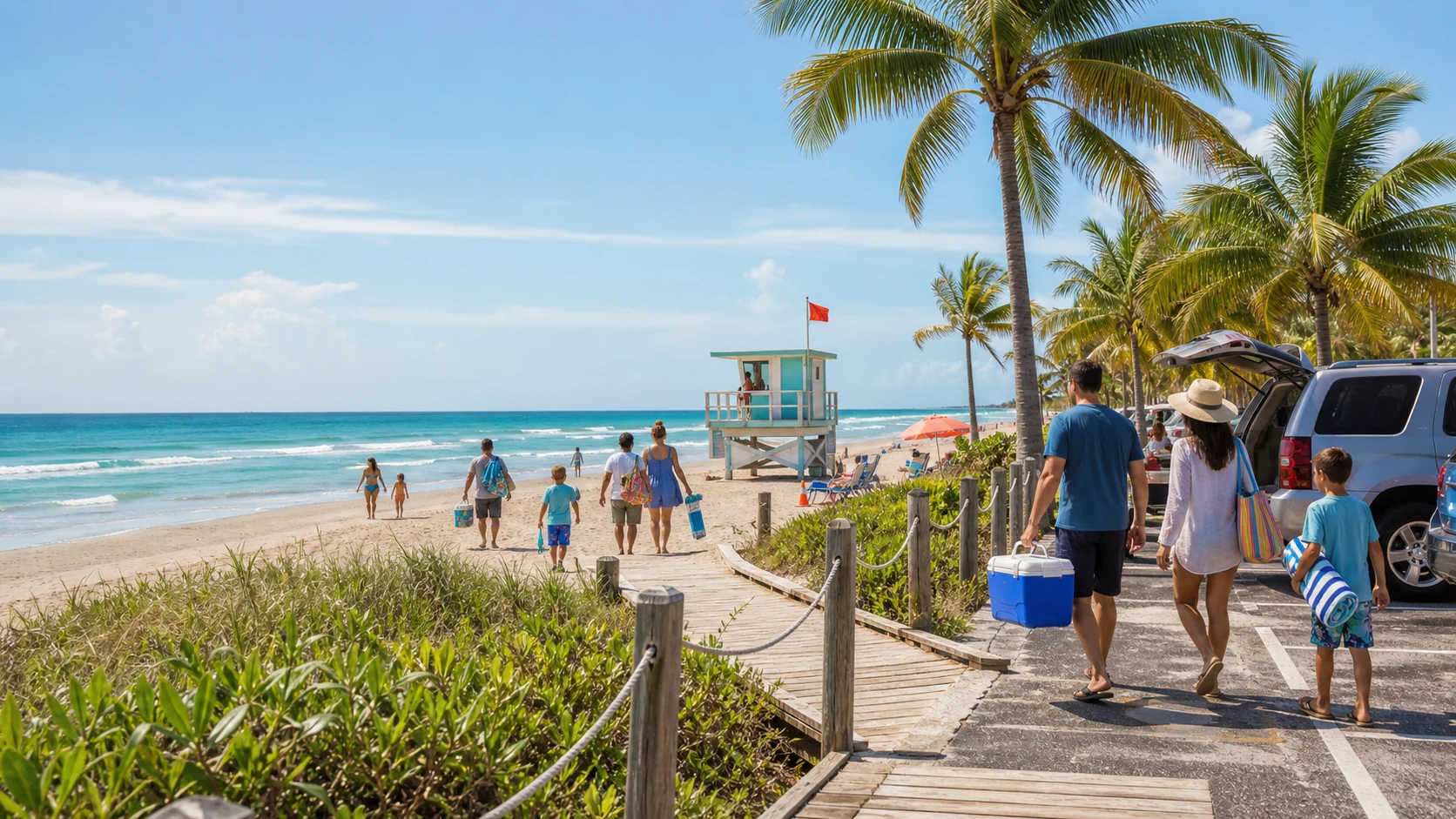
Miami beaches are not one single experience. You may want an urban shoreline with a long beachfront walk, a broad family beach where you can spend several hours, or a state park with its own landscape and rules. The difference between an easy outing and a frustrating afternoon often comes down to three decisions: choosing the right access point, checking parking before leaving, and reading the water conditions when you arrive.
This guide helps you plan a visit; it does not promise an empty beach, available parking, or safe ocean conditions on a particular date. Conditions change. Before entering the water, follow the local warning, the latest beach forecast, and the lifeguard’s instructions.
Which Miami beach fits your plan?
Miami Beach is the urban option. The city maintains a seven-mile stretch with lifeguard towers and flags that communicate currents, surf, marine life, and water-quality information. It works well if you want to combine sand with a walk, restaurants, and city transportation. The official Miami Beach Beachwalk connects sections of the oceanfront and has access points, water fountains, and restrooms in several areas.
Crandon Park, on Key Biscayne, has a two-mile beach, a promenade, picnic areas, concessions, and parking for just under 3,000 vehicles according to Miami-Dade Parks. It is practical for families planning to stay for several hours, but the park charges for parking and its published rates should be checked before you drive.
Haulover Park has 1.4 miles of coastline and year-round lifeguarded swimming areas. It also offers picnic areas, concessions, and sections with specific rules, so read the park map and signs when you enter. If you are bringing a dog, beach access is limited to the designated area across from the Bark Park; do not assume every stretch allows pets.
Bill Baggs Cape Florida State Park is another Key Biscayne option. Its current park page lists hours from 8 a.m. to sunset, an $8 vehicle entrance fee, and temporary closures affecting some facilities. The park may close when it reaches capacity, particularly on weekends and holidays, so arriving early is part of the plan.
If you are building a larger itinerary, pair this outing with our seasonal Miami guide and review where to stay by area. These choices are connected: travel time can change which beach access is most convenient.
How to plan access and timing
Confirm the exact access point, not just the beach name. Open the city or park page, check capacity notices, construction, and hours, and save the official address. At parks with controlled parking, vehicle access can close temporarily when lots fill. At Bill Baggs, a capacity closure can prevent vehicles, pedestrians, and bicycles from entering during the period announced by the park.
For a full beach day, arrive early, especially on weekends and holidays. Bring water, sunscreen, a bag for waste, and dry clothes. If you are traveling with children, agree on a visible meeting point before going near the water and provide active supervision: being nearby is not the same as watching continuously.
Visitors with mobility needs should check the specific access points. Miami-Dade lists pathways from the beach road to the sand at Haulover and Crandon and makes beach wheelchairs available at no charge at those beaches, subject to availability and the park’s check-out process. Accessibility is not identical at every entrance, so confirm the location before leaving.
Parking: what to check before driving
Parking rates are not uniform. Miami Beach’s municipal page separates zones and distinguishes on-street from lot and garage parking. The current listings show rates from $1 to $4 per hour depending on the area, with different enforcement hours and time limits. The city is also advertising a temporary $1-per-hour promotion from August 1 through October 31, 2026, with conditions and ParkMobile requirements. Check the page before paying because rates and promotions can change.
At Crandon Park, Miami-Dade publishes $7 plus tax Monday through Thursday and $10 plus tax Friday through Sunday. At Haulover, the park page publishes $7 for cars Monday through Thursday, with a surcharge in certain lots, and $10 on weekends and holidays; beach parking lots open at sunrise and close one hour before sunset. These are references from the official pages reviewed, not a guarantee for a future date.
Park only in marked spaces and keep your receipt or app confirmation. Do not block ramps, access routes, emergency lanes, or service areas. Miami-Dade has specific rules for parking inside its parks, and restrictions can apply even if other vehicles are parked incorrectly.
Flags and water conditions
Florida beach flags are general warnings about surf and water conditions; they do not replace a conversation with a lifeguard or an updated forecast. Under the state system, double red means the water is closed to the public; red means high hazard from surf or strong currents; yellow means medium hazard; green means low hazard with caution; and purple signals dangerous marine life. No flag does not guarantee safe water.
Miami-Dade advises visitors to check flags, swim in protected areas, and never swim alone. Miami Beach explains that its towers are staffed by trained professionals who monitor swimmers and post warnings. If the water is closed or a lifeguard tells you to leave, follow the full instruction instead of entering “just for a minute.”
Rip currents: what to do
A rip current is a flow moving away from shore through the surf zone. It can appear even under clear skies and with waves that do not look large. The National Weather Service recommends checking the beach forecast, swimming near lifeguards, and looking for signs or flags before entering.
If you are caught in a rip current, do not swim directly against it. Stay calm, float or tread water to conserve energy, and, if you can do so safely, swim parallel to shore until you are out of the current. Then angle back toward the beach. If you cannot escape, raise one arm and call for help. If you see someone in trouble, alert a lifeguard or call 911 and throw something that floats; do not form a human chain or enter the current behind them.
A simple family checklist
- Check the official access, hours, capacity, and parking information.
- Arrive early on weekends and holidays.
- Locate the lifeguard tower and read the flag before entering the water.
- Supervise children directly; flotation toys are not a substitute for supervision.
- Do not swim alone, do not drink alcohol before swimming, and do not use unauthorized flotation devices in the ocean.
- Bring water, sunscreen, identification, a charged phone, and a bag for waste.
Limits and sources for this guide
This guide was prepared on August 22, 2026 using information published by the City of Miami Beach, Miami-Dade County Parks, Miami-Dade Fire Rescue, Florida State Parks, Florida DEP, and the National Weather Service. Rates, closures, construction, flags, and hours can change: check the official page for your access point on the day of your visit. We do not claim that any beach is free of currents, algae, storms, crowds, or closures, and this article does not replace a lifeguard’s direction or an official alert. The hero image is an illustration generated for this article; it is not a photograph and does not represent current conditions at a specific beach.