Of Amazing Things / profesionales / electricistas
Certified Electricians in Miami: Hiring Guide
How to check licenses, permits, safety practices, and costs before approving electrical work in Miami.
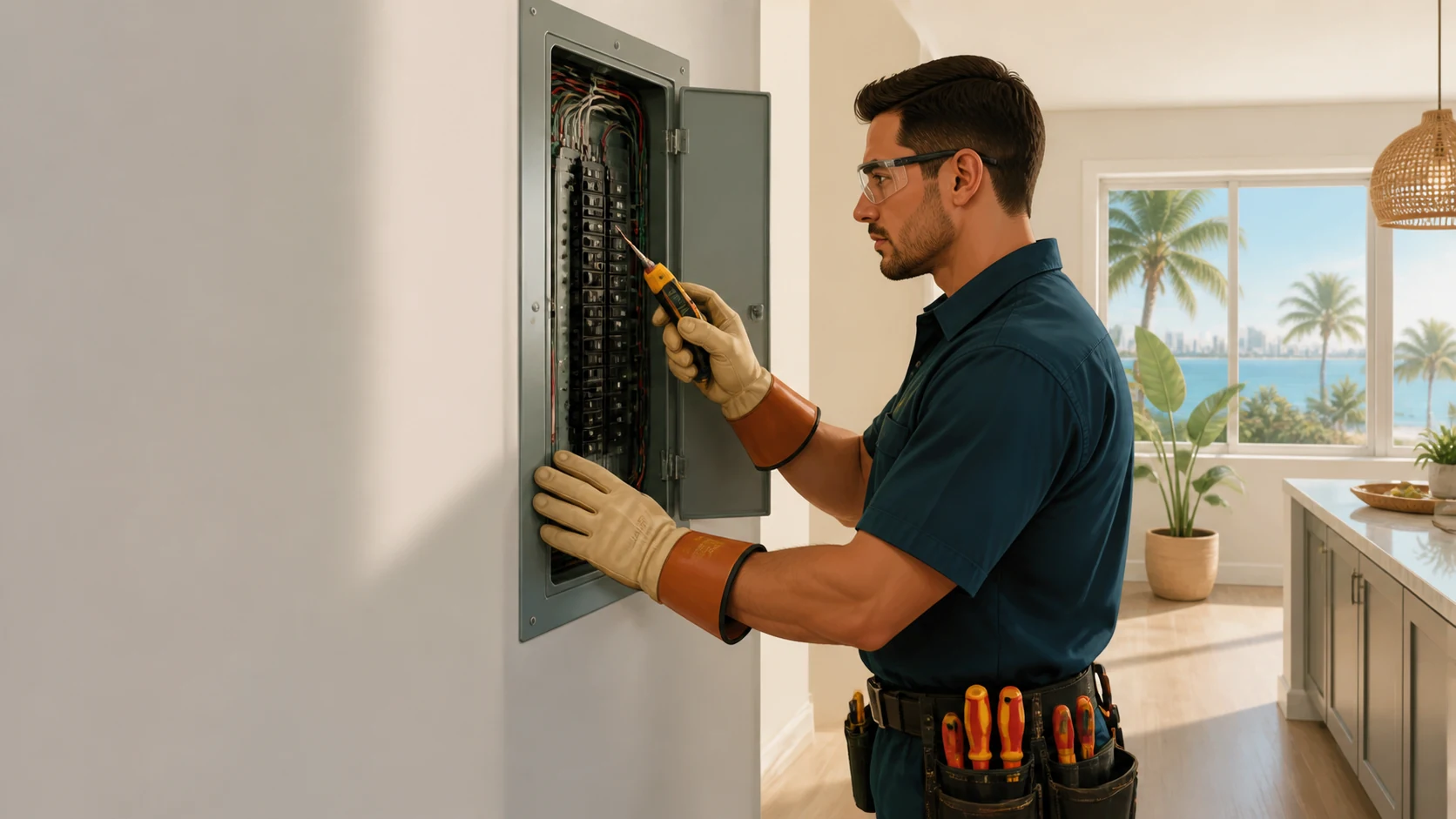
Searching for certified electricians in Miami should not mean choosing the first listing that answers. Before approving a panel change, a new circuit, a generator connection, or a repair, check who is authorized, whether a permit may be required, how the work will be kept safe, and what the quote actually includes.
This guide does not recommend a particular company or publish an average price. The final cost depends on the scope, materials, access, jurisdiction, permits, and inspections. The cover illustration is AI-generated and does not show a real job or an identifiable company.
What “certified” means in Florida
Florida’s Department of Business and Professional Regulation, DBPR, distinguishes certified and registered licenses. A certified license allows a contractor to work statewide; a registered license is limited to the cities or counties where the professional holds the applicable competency card. That difference matters when a company advertises across several parts of South Florida.
DBPR also explains that each electrical business must be qualified by a properly licensed individual contractor to perform construction activities in Florida. Looking only at a business name is therefore not enough. Ask for the contractor’s license number and confirm which individual qualifies the entity that will invoice you.
Start with the official DBPR information for electrical contractors and continue with the MyFloridaLicense license search.
How to verify the professional before hiring
Request the legal name, license number, and name of the business that will issue the invoice. The official portal supports searches by number, name, or entity. Compare the result with the quote and note the license type and status. Save the date of the search because a verification is a record snapshot, not a permanent guarantee about the quality of future work.
If the electrician says they work under another company, ask who the qualifying contractor is and who will take responsibility for the permit. Also request current proof of general liability coverage and, when applicable, workers’ compensation coverage. Insurance does not replace a license, and a license does not tell you what coverage exists: each document answers a different question.
When to ask about an electrical permit
Miami-Dade says an electrical permit helps ensure that electrical work is performed safely and correctly, and that permitted projects must comply with the Florida Building Code. The county’s electrical page covers applications, categories, plan review, and inspections. Do not assume that an urgent repair, a component replacement, or a circuit modification is automatically exempt.
The correct authority can depend on the location. Miami-Dade explains that each municipality in the county has its own building official for work within its limits. Before signing, ask: “Does this scope require a permit, who will apply, and who will coordinate the inspection?” Put the answer in the quote and keep the permit number if one is issued.
The Miami-Dade electrical permits page explains forms, categories, plans, and inspections. The county’s permit application guide helps confirm which office applies to your property.
What to review in a quote
A useful quote describes the observed problem, the proposed scope, and the exclusions. Ask for separate lines for diagnosis, labor, materials, removal, permit, inspection, after-hours or emergency charges, taxes, payment terms, and warranty. If the diagnosis does not support a fixed total yet, request a range and an approval limit: additional work should not exceed that limit without your authorization.
The contractor’s quote and the public permit fee are not the same thing. Miami-Dade publishes a building permit fee page and an electrical fee sheet. Those tables help identify the administrative component, but they do not calculate labor, materials, or the conditions of a particular home. Check the current version before making a decision.
Safety signals that should not be negotiated
Electrical work can involve shock, arc-flash, fire, and installation hazards. OSHA identifies these risks in the electrical contractor industry. As a customer, you do not need to direct technical procedures, but you can ask for a clear plan: what will be de-energized, how the area will be protected, what tests will be performed, and what will be closed and labeled when the job is complete.
Do not touch wet equipment, exposed wiring, or a panel showing smoke or heat. Keep children and pets away and call emergency services for fire, heavy smoke, or a situation you cannot control safely. Do not open the panel to “help” the electrician, and do not accept unsafe work simply to save time. An urgent job is not automatically suitable for an untrained person.
How to follow the work and inspection
Before work begins, photograph the visible condition of the area and note which circuits or appliances are affected. During construction, do not remove the permit or approved plans from the site when the authority requires them to be available. Miami-Dade states that the permit card and approved, stamped plans must be at the construction site, and that inspections may be on-site or virtual depending on the case.
Ask for the permit number, expected inspection date, and result when applicable. If an inspection produces a correction, request a written explanation of what must be fixed and who will fix it. Do not confuse an approved inspection with a commercial warranty: an inspection checks requirements within the process, while warranty and maintenance terms are agreed with the contractor.
What to keep after the job
Keep the accepted quote, scope changes, invoices, payment records, license verification, certificates or policies provided, permit number, inspection records, and warranty. This file makes future repairs, condominium-management questions, or insurance conversations easier. If the work was performed in a rental, give the documentation to the owner or manager as required by the lease.
If the work does not match the agreement, document the difference and complain in writing first. For a licensing or regulated-activity concern, use the state’s official channels and provide verifiable information. Avoid public accusations based only on a delay, a review, or a suspicion: a commercial disagreement and a licensing violation are not necessarily the same issue.
Sources, limits, and our opinion
Sources and limits: We consulted DBPR, MyFloridaLicense, Miami-Dade County, and OSHA on August 15, 2026. Permit rules can vary between the county and each municipality, and the actual scope can change the forms, review, and inspection. We do not include company names, labor prices, arrival times, or personalized legal or electrical advice. Confirm current requirements with the relevant authority and a qualified professional.
Our Honest Take
When hiring an electrician in Miami, the most valuable signal is not a promise of speed. It is a willingness to show the license, explain the permit, and provide a quote that acknowledges what cannot be known yet. We would rather compare two documented proposals than chase a low price that does not say who is responsible for inspection or safety.
If you are planning home repairs, you can also visit our Miami professionals section, read our guide on choosing an emergency plumber, and use our seasonal Miami guide. These are editorial resources, not certifications of any provider.