Of Amazing Things / profesionales / plomeros
How to Choose an Emergency Plumber in Miami
A practical checklist for verifying licenses, insurance, permits, estimates, and warning signs before urgent repairs.
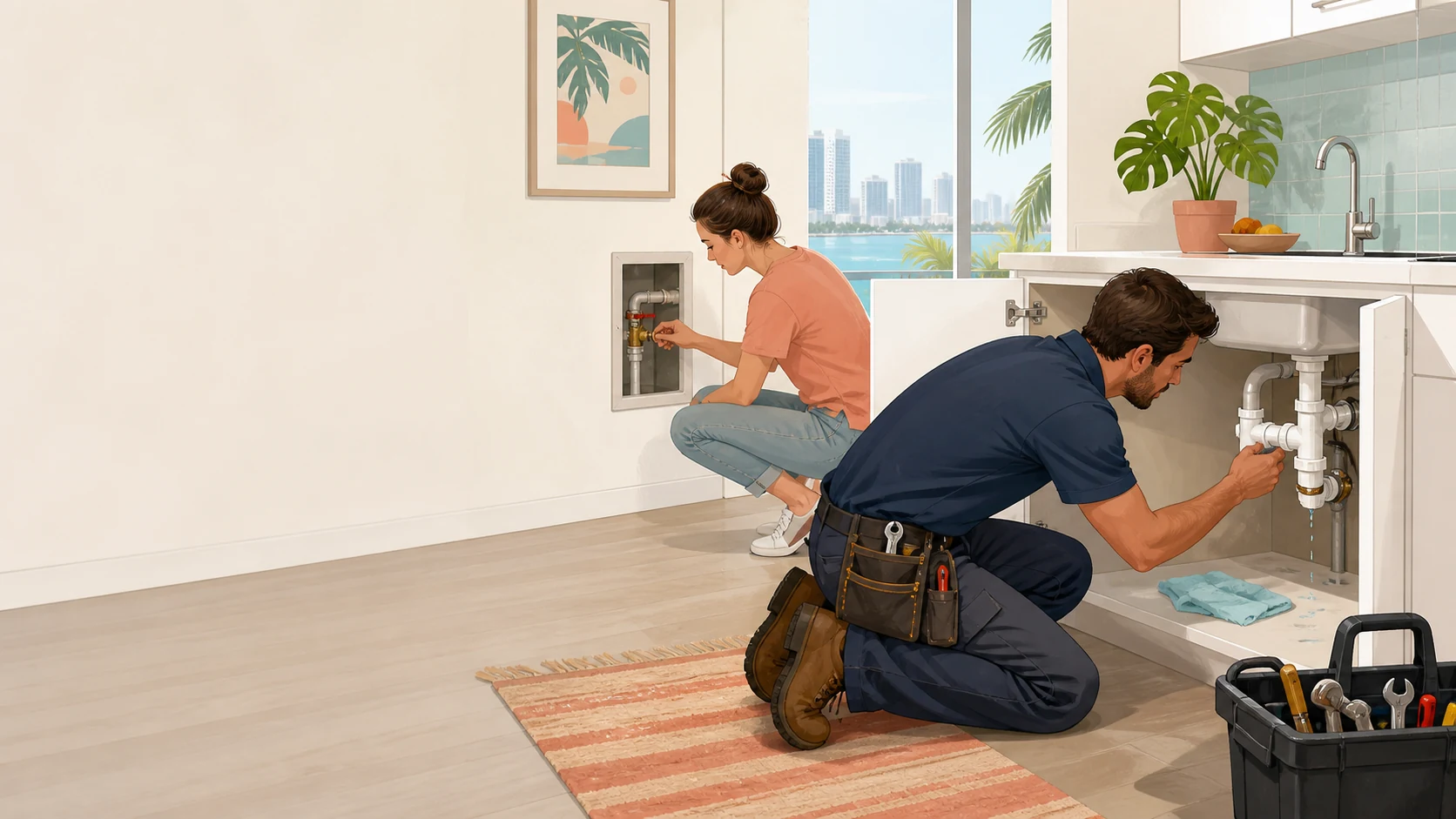
When water starts coming from somewhere it should not, choosing an emergency plumber in Miami can feel like a decision that must happen in seconds. Speed should not eliminate basic checks, though. A license number, proof of coverage, a clear estimate, and a proper invoice can help you avoid a poor repair or a difficult dispute later.
This guide does not recommend specific companies or publish prices. It gives you a method for comparing professionals, asking useful questions, and knowing when to shut off the water, document the damage, and call for help. If the problem happens during a storm, our Florida home hurricane-preparation guide can help you plan before the next emergency.
1. Verify the license before letting anyone start
Florida’s Department of Business and Professional Regulation, or DBPR, provides an official license-verification process that can search by name, city, or license number. Before hiring, ask for the license number and compare the person or business name with the public result. The state’s own guidance explains that search results show the licensee’s profession, address, and license status.
An advertisement saying “licensed” is not enough. Save the result or note the date because a status can change. Also confirm that the license matches the work you are hiring for and that the company billing you is connected to the professional who arrives. If someone refuses to provide a license number, there is no good reason to rush.
Start with Florida’s official license-verification guidance and the MyFloridaLicense online-services portal.
2. Ask for insurance and workers’ compensation information
A license answers one question: who is authorized or registered to work. Insurance answers another: what happens if property is damaged or someone is hurt on the job. Ask for current proof of general liability coverage and ask who covers the people entering your home.
Florida’s Division of Workers’ Compensation explains that construction employers with one or more employees generally need coverage, and that a primary contractor must verify coverage for subcontractors. That does not mean every business has identical paperwork: a company may have employees, exempt owners, or subcontractors with different documentation.
Do not treat a verbal assurance as a substitute for documentation. Ask for the information in writing, check that the name matches, and ask which company will perform each part of the work. If a professional cannot explain coverage, treat that as a risk signal and compare another option.
3. Clarify permits before the work begins
Miami-Dade’s official plumbing-permits page explains that plumbing projects may require specific forms, plan review, and inspections. The county also says that some repairs or alterations to plumbing systems require an application and permit, while each municipality may have its own building official.
Ask one direct question: “Does this work need a permit, and who is handling it?” Put the answer in the estimate. Do not assume that an urgent repair is automatically exempt. A small fixture repair, a pipe alteration, and a sanitary-line project can have different requirements depending on the scope and jurisdiction.
Review Miami-Dade’s plumbing-permits page and confirm whether the property is in unincorporated Miami-Dade or inside a municipality with its own rules. A professional should be able to explain which office or portal applies without asking you to guess on an application.
4. Compare estimates without chasing the lowest price
During an emergency, ask first about the service-call or diagnostic fee, then request a separate estimate for the repair. A useful document identifies labor, materials, emergency charges, payment terms, exclusions, and any warranty. If the final total cannot be known until a wall or pipe is opened, ask for a range and an authorization limit: “Do not exceed this amount without calling me.”
Be careful with a final price given over the phone before anyone inspects the problem, a discount that expires in minutes, or a demand for full payment before work begins. You do not need to accuse anyone to protect yourself. Say that you need to compare estimates, keep the messages, and request an itemized invoice with the legal name and contact information of the person or business collecting payment.
For work involving walls, floors, water heaters, or sanitary lines, ask what temporary measure will prevent further damage and what will remain unfinished. If you rent or live in a condominium, notify the owner or building manager before authorizing a major alteration.
5. Reduce damage while you wait
Before the professional arrives, shut off the water if you can do so safely, move vulnerable belongings, and take photos or video of the leak. Do not handle wet electrical wiring, enter an unsafe area, or break open a wall to locate a pipe. If the water comes from a water heater, main line, or shared building system, notify the property manager as well.
Prepare the details the plumber will need: address, property type, shutoff location, when the problem began, affected fixtures, and prior repairs. A precise description can speed up diagnosis without making you responsible for a repair you do not understand.
If the damage may involve homeowners insurance, keep receipts and communications. That does not guarantee reimbursement; coverage depends on the policy, the cause, and its exclusions. Documentation simply helps you explain what happened and what steps you took.
6. Recognize warning signs and keep a paper trail
Pause the hiring process if someone refuses to show a license, will not identify who is billing you, will not provide an estimate, demands cash without a receipt, pressures you to sign immediately, or asks you to hide the work from an owner, manager, or local authority. An unbranded truck alone does not prove fraud; a pattern of evasiveness, urgency, and missing documentation deserves caution.
Before authorizing work, repeat the agreed scope by text or email. When the job is finished, request an invoice, written warranty, and permit or inspection records when applicable. If the result does not match the agreement, document the difference and complain in writing first. For licensing or unlicensed-activity concerns, use Florida’s official complaint and verification channels with facts you can support, not rumors.
Sources, limits, and our honest take
Sources and limits: this article uses official resources from DBPR, Miami-Dade County, and Florida’s Division of Workers’ Compensation checked on August 14, 2026. Permit rules depend on the municipality and project scope; insurance requirements depend on the company structure and task. We do not include company names, prices, arrival times, or legal advice. For a specific permit or complaint, confirm the current rule with the relevant authority.
Our Honest Take
In an emergency, the strongest sign of professionalism is not a promise to arrive in twenty minutes. It is a clear explanation of what is known, what still needs diagnosis, and what authorization you need to give. We prefer an estimate that acknowledges uncertainty and a license you can verify over a spectacular promise that cannot be checked.
If you are building a home-services checklist, you can also visit our Miami professionals section, read our guide on comparing a Miami professional, and use the seasonal Miami guide to organize other tasks. Those links are editorial orientation, not a certification of any provider.